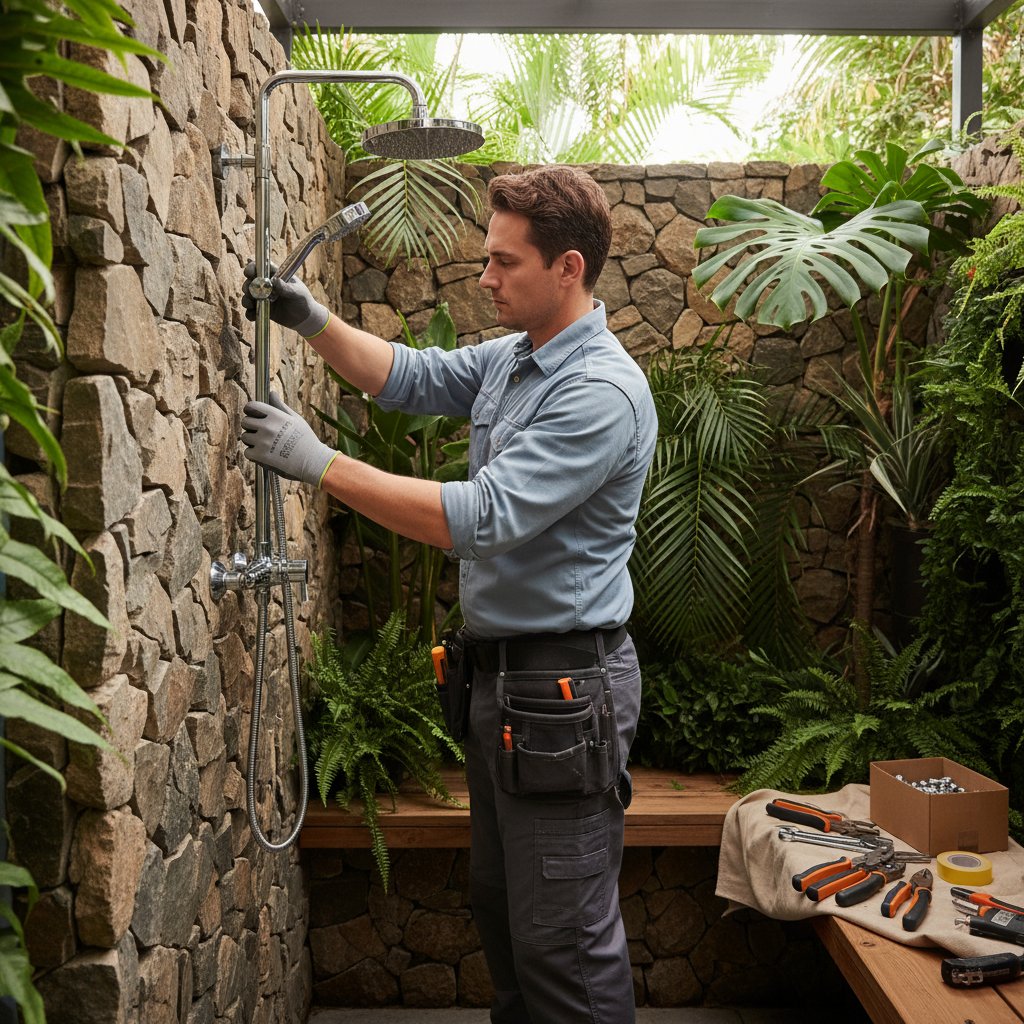
Planning a bathroom renovation with spa-like features requires careful consideration. Here are answers to common questions about installing freestanding tubs and outdoor showers in Singapore homes.
A freestanding tub typically requires a minimum floor area of 2.5 to 3 square meters for comfortable placement and movement around it. Standard tub dimensions range from 1500mm to 1800mm in length and 700mm to 900mm in width. You should allow at least 300mm of clearance on all sides for cleaning access and visual balance.
For Singapore HDB flats, bathrooms measuring 2.4m x 1.8m or larger can accommodate a freestanding tub, though you may need to reconfigure existing fixtures. Landed properties and condominiums with master bathrooms of 3m x 2.5m or more offer ideal conditions. The ceiling height should be at least 2.4m to maintain proper proportions and ventilation.
Outdoor showers work well in Singapore's tropical climate, particularly in landed properties with private courtyards or balconies. For HDB flats and condominiums, installation requires approval from building management and must comply with URA guidelines regarding water drainage and privacy screens.
The setup needs proper waterproofing membranes rated for outdoor use, corrosion-resistant fixtures made from stainless steel or brass with marine-grade coating, and drainage systems that connect to existing sewage lines. Privacy considerations include installing frosted glass panels, timber screens, or strategically placed plants. Most installations in Singapore use hot and cold water mixing valves, though some homeowners opt for cold water only to reduce plumbing complexity.
Freestanding tubs require either floor-mounted or wall-mounted faucets. Floor-mounted options need water supply lines routed through the floor slab, which involves core drilling and may require structural approval in HDB flats. Wall-mounted faucets are simpler to install but must be positioned within 1.5m of the tub edge for proper reach.
Drainage typically uses a 50mm waste pipe connected to your existing sewage system. The floor must support the tub's weight when filled - a standard 1700mm acrylic tub holds approximately 250 liters of water plus user weight, totaling around 350kg. Concrete floors in Singapore homes generally handle this load, but wooden floors in older landed properties may need reinforcement. Water pressure should be at least 1.5 bar for adequate flow; some areas may require a booster pump.
A complete renovation ranges from $15,000 to $45,000 depending on materials and scope. Freestanding tubs cost between $1,200 and $8,000, with acrylic models at the lower end and cast iron or stone resin at the premium range. Installation adds $800 to $2,500 for plumbing work, floor preparation, and faucet mounting.
Outdoor shower installations vary from $3,500 to $12,000 based on complexity. This includes waterproofing ($800-$1,500), fixtures ($600-$3,000), drainage work ($1,200-$2,500), and privacy screening ($900-$4,000). Additional costs include tiling ($80-$150 per square meter), lighting ($300-$1,200), and ventilation upgrades ($500-$1,800). Landed properties typically incur higher costs due to larger spaces and more extensive plumbing modifications.
Singapore's humidity and rainfall require materials that resist corrosion, mold, and UV degradation. For fixtures, choose stainless steel grade 316 or solid brass with chrome or brushed nickel finish. These withstand constant moisture exposure without pitting or discoloration.
Flooring options include non-slip porcelain tiles with R11 rating, teak wood decking treated with marine varnish, or pebble wash concrete. Wall surfaces work well with large-format porcelain tiles, fiber cement boards, or treated timber cladding. Avoid regular steel, untreated wood, and natural stone that stains easily. Grout should be epoxy-based rather than cement-based to prevent mold growth. All metal components need regular cleaning with fresh water to remove salt and mineral deposits from Singapore's water supply.
A standard bathroom renovation with freestanding tub installation takes 3 to 5 weeks. The first week involves demolition and plumbing rough-in, including floor drilling for tub drainage and water supply lines. Weeks two and three cover waterproofing, tiling, and fixture installation. The final week handles finishing touches, grouting, and testing.
Adding an outdoor shower extends the timeline by 2 to 3 weeks due to additional waterproofing requirements, outdoor drainage work, and weather delays during rainy periods. For HDB flats, factor in 1 to 2 weeks for obtaining necessary approvals from HDB and town council. Condominiums may require 2 to 3 weeks for management approval. Custom elements like imported fixtures or specialized finishes can add another 4 to 6 weeks for delivery and installation.
Freestanding tubs need weekly cleaning with non-abrasive cleaners suitable for your tub material. Acrylic tubs require gentle pH-neutral solutions, while cast iron with enamel coating can handle slightly stronger cleaners. Check and clean the drain trap monthly to prevent clogs. Inspect caulking around the base every 6 months and reseal if gaps appear.
Outdoor showers demand more frequent attention due to weather exposure. Rinse fixtures with fresh water after each use to prevent mineral buildup. Clean tiles and grout weekly with mildew-resistant cleaner. Inspect drainage quarterly to ensure proper flow and clear any debris. Check waterproofing seals every 6 months, particularly around fixture mounting points. Reapply protective coating to wooden elements annually. In Singapore's climate, expect to deep clean outdoor shower areas monthly and address any rust spots immediately to prevent spreading.
Cleanplaceinsight began in 2015 when a group of bathroom renovation specialists in Singapore recognized a growing demand for luxury home spa experiences. We started with three designers and four installation technicians working from a small office in Ang Mo Kio. Our first project was a modest bathroom conversion in Bishan that featured a freestanding tub and natural stone finishes.
That initial installation taught us the technical challenges of creating resort-style bathrooms in Singapore's climate. High humidity, limited ventilation, and space constraints required solutions beyond standard renovation practices. Over eight years, we completed 340 bathroom projects across Singapore, from HDB flats to landed properties in districts like Bukit Timah and East Coast.

We design and install spa-quality bathrooms that function reliably in Singapore's tropical environment. Each project receives a waterproofing assessment, ventilation analysis, and material selection suited to local conditions.
Every installation follows BCA guidelines for waterproofing and drainage. We conduct pressure tests on all plumbing connections and verify slope gradients for outdoor shower areas.
We source materials rated for tropical climates, including mold-resistant grout, UV-stable outdoor fixtures, and non-slip tiles tested to SS550 standards.
Clients receive detailed quotations listing material costs, labor hours, and timeline estimates. We document each installation phase with photos and provide maintenance guidelines upon completion.
Our team includes six licensed plumbers, four tiling specialists, and two designers with certifications in bathroom planning. We maintain partnerships with suppliers in Balestier and Lavender Street for sourcing freestanding tubs, rainfall showerheads, and outdoor-rated fixtures. All installations come with a two-year workmanship warranty covering leaks, tile adhesion, and fixture mounting.
We handle HDB renovation permits and landed property approvals, coordinating with management corporations when required. Our average project duration is three weeks for standard bathrooms and five weeks for installations including outdoor shower components.